
Rethinking energy in development projects

For many developers today, the biggest constraint is no longer land, demand, or financing. It is access to power.
The collaboration between Prelect, Evver Brix, Fossen Kraft, and Capture Energy is rooted in exactly this challenge. How do you move projects forward when the grid cannot deliver the capacity you need?
The answer is not a single technology, but a more coordinated way of working with energy. By combining local production, storage, and intelligent control, the partners are creating systems that make it possible to develop even in grid-constrained areas.
Each partner plays a distinct role in making this work. Fossen Kraft contributes with energy expertise and helps link the project to the broader system. Evver Brix leads the development and coordinates the overall project. Capture Energy delivers battery systems and control technology as part of the physical infrastructure. Prelect provides the digital layer through an intelligent platform that connects and optimizes electrical infrastructure across assets, use cases, and markets.
Together, the ambition is clear: to turn energy from a constraint into something that actively enables development.
“These are the types of projects we really enjoy working on. When you take a holistic approach and think about the entire energy system from day one, every part of the project becomes an opportunity to optimize and create value. That is where our technology really comes into its own,”
Stian Hovda Bergersen, CRO at Prelect
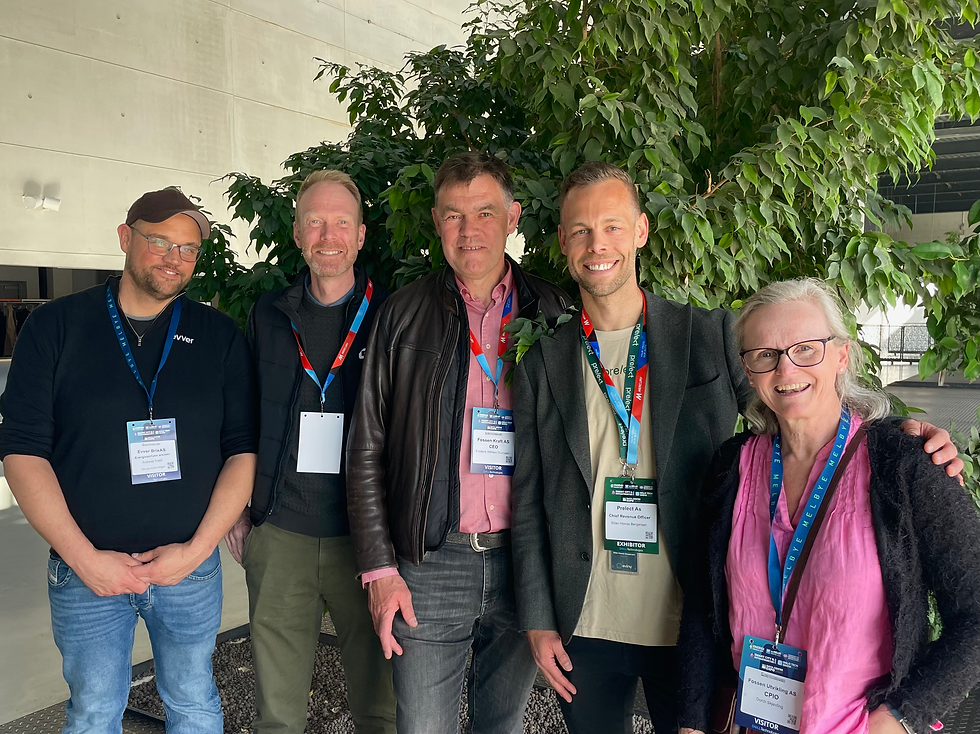
Tanberghøgda: Extracting value from assets across the entire lifecycle
That shared approach is now being put into practice at Tanberghøgda. The development is ambitious. A large scale residential area will be built out in phases over several years, with a clear goal of enabling low emission construction and long term sustainable energy use.
At the same time, available grid capacity is limited, making it difficult to support both construction and long term operation through traditional solutions. Instead of waiting for grid upgrades, the project is building a local energy system designed to evolve over time.
0.5 MWp solar power is installed, designed with multiple orientations to create a stable and predictable production profile rather than chasing short peaks. This is a deliberate choice, reflecting the need to operate within grid constraints rather than around them. A battery energy storage system from Capture Energy is also part of the solution, with 1MW of power capacity and 2.3 MWh of storage. Together with Prelect’s platform, it connects physical infrastructure with control systems and access to energy markets.
What makes the setup particularly interesting is how it is used across different phases of the project. In the early stage, the battery participates in flexibility and balancing markets such as mFRR and FCR. This allows the asset to generate revenue before the rest of the project is even started. As construction ramps up, the system takes on an additional role by supporting the building site itself. By supplying and managing power locally, it reduces or removes the need for traditional temporary construction power, while also limiting peak demand on the grid connection. This is a key driver for improving project economics already during the build phase. Over time, as the residential area is completed, the role shifts again. Solar production, storage, and consumption are coordinated to supply and optimize energy use across the different units.
Instead of building separate solutions for each phase, the project is at all times considering the big picture and the same assets are continuously optimized based on what creates the most value at any given time.
The Value for Developers and Site Owners
The key in modern development projects is not new technology. The core components of electrical infrastructure have existed for a long time. What is changing is how they work together, and how you build a dynamic value stack that evolves with the development itself. Instead of serving a single purpose, the same assets can create value in different ways over time, depending on where you are in the project lifecycle.
This makes it possible to:
Start projects earlier, even with limited grid capacity
Use assets to generate revenue before they are needed for core operations
Support construction without oversizing grid connections
Transition seamlessly into long term operation
Public support mechanisms are also helping accelerate this type of development. At Tanberghøgda, support from Enova plays a role in enabling the energy system to be realized, reducing risk and helping bring this type of solution from concept into actual projects.
For developers and site owners facing limited grid capacity or looking to improve project economics, Tanberghøgda demonstrates that this is not just a theoretical model, but a proven way to move projects forward. And as all partners agree, this is just the beginning:
“We believe the future will be built around smarter and more local energy systems. To make that work, you need players who can collaborate across technology, development, and execution. This is not just about energy — it is about enabling growth, industry, and societal development at a time when energy has become one of the biggest bottlenecks,”
Andreas Vist Trætli, CEO of Evver Brix
About the partners
Prelect
Prelect is a technology company developing AI-powered software for managing and optimizing electrical infrastructure. Its platform connects assets such as batteries, EV charging, and solar systems, enabling remote control, load balancing, and participation in energy markets. The company focuses on helping operators increase the value of their infrastructure through better data, automation, and system coordination. Les mer
Evver Brix
Evver Brix is part of the Evver ecosystem, which focuses on developing local energy systems that remove energy as a bottleneck for new projects. The company works as a project integrator, combining technologies such as solar, battery storage, and energy management into complete solutions delivered from design to operation. The goal is to enable faster and more cost-efficient development of industrial sites, commercial areas, and residential projects. Les mer
Fossen Kraft
Fossen Kraft develops and owns energy solutions and infrastructure. The company has experience in building integrated energy systems that combine local production, storage, and distribution, including solar, battery storage, and thermal energy solutions. It is also involved in projects targeting flexibility markets and new energy system models in the Nordics. Les mer
Capture Energy
Capture Energy is a battery company that designs, installs, and operates large-scale battery energy storage systems. The company provides end-to-end solutions, covering everything from system design and grid connection to operational control and market participation. Its systems are used to store renewable energy, balance supply and demand, and unlock new revenue streams through flexibility markets. Les mer

